

FEATURE: Can smart glasses improve cognitive abilities?
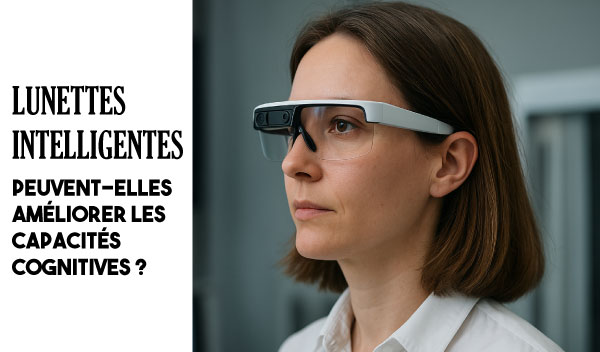
For several years now, smart glasses have been constantly evolving. Long seen as simple gadgets, they are now beginning to establish themselves as true interfaces capable of augmenting our sensory and cognitive abilities. Beyond visual correction and traditional digital aids, these devices could soon support memory, optimize attention, and even facilitate decision-making. Research conducted by laboratories such as the MIT Media Lab shows that the future of smart glasses could well lie in augmented cognition . But what are the real prospects and what limitations do these technologies still encounter?
Smart glasses: from corrected vision to augmented cognition
Traditional glasses are limited to correcting visual defects. Smart glasses, on the other hand, seek to take this a step further: improving perception and information processing. To achieve this, they have several features.
- Contextual display : Thanks to augmented reality (AR), they can overlay real-time information in the visual field. This can, for example, help a surgeon follow an operating protocol without taking their eyes off the patient, or help a student view live diagrams during a lecture.
- External memory : Prototypes developed at the MIT Media Lab are exploring the idea of glasses capable of "recalling" contextual information. By recognizing a face, they could display the name and last conversation, thus reducing the cognitive load related to memory.
- Cognitive optimization : According to some publications, these glasses could even regulate attention by sending subtle visual signals, for example to help stay focused during a complex task.
This transformation of glasses into a cognitive human-machine interface opens the way to a revolution: they would no longer be simple optical tools, but direct extensions of our mental faculties.
Promises for memory, attention and decision making

Human cognition is based on three pillars: memory, attention, and decision-making. Smart glasses could intervene in each of these areas.
With assisted memory: experimental prototypes allow visual information to be automatically recorded and indexed. Imagine a student who can instantly retrieve their notes by looking at a diagram, or a doctor who can access a patient's medical history in the blink of an eye.
Several academic publications also highlight the potential of smart glasses to detect signs of distraction (using biometric sensors or eye tracking). They could then refocus the user with light notifications for better attention management.
In stressful or emergency situations (pilots, military personnel, emergency workers), smart glasses could help with decision-making by providing action scenarios, reducing reaction time and thus limiting human errors.
These developments reflect a clear ambition: to create a cognitive partner that accompanies the user on a daily basis. Of course, this prospect raises questions about the role of machines in our choices and the risk of an even greater dependence on technology.
Technical, ethical and social challenges

While the potential is immense, several obstacles remain.
First, regarding technology and ergonomics . Miniaturizing sensors, ensuring sufficient battery life, while maintaining the comfort and aesthetics of traditional glasses remains a major challenge. Current prototypes often suffer from a lack of practicality.
As with any digital innovation, ethics and privacy are central challenges. Continuously recording personal and contextual data (faces, conversations, locations) poses considerable risks in terms of surveillance and privacy.
These challenges are also social. Access to these technologies could be limited to an elite, thus widening the gap between those who benefit from augmented cognition and those who do not, leading to significant inequalities.
Finally, some research shows that too much information displayed in the visual field could, on the contrary, saturate attention and harm cognitive efficiency, leading to what is called a paradoxical cognitive load.
These challenges suggest that the adoption of smart glasses will require clear guidance, both regulatory and societal.
What future for augmented cognition?
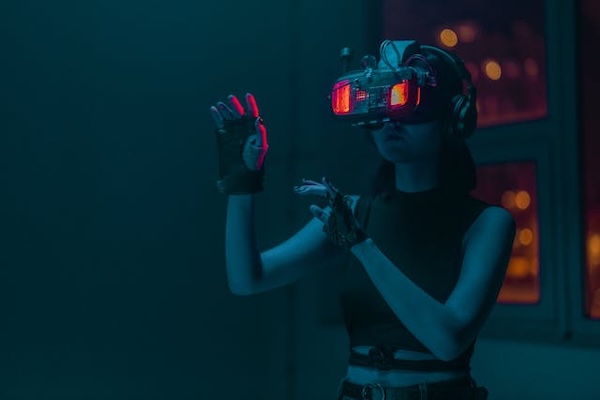
The future of smart glasses will depend on how the technology is integrated into everyday life and accepted by society.
From a prospective point of view, three trajectories seem to be emerging:
- “ Business as Usual” (following the trend): connected glasses are evolving as they are today, focused on practical uses (translation, navigation, notifications).
- “ Augmented cognition scenario” : they become true cognitive co-pilots, integrated into medicine, education and high-responsibility professions.
- “ Unlikely scenario but…” : their massive adoption radically transforms human cognition, with a redefinition of the notions of memory and attention.
The MIT Media Lab and other research institutes continue to experiment in this area, opening up a vast field of possibilities. But technology alone will not be enough: its integration must be accompanied by a public debate on its ethical and social implications.
Because smart glasses are likely to quickly move beyond just being a high-tech gadget. They could soon become a cognitive interface capable of increasing our memory, attention, and decision-making abilities.
However, their success will depend as much on technological advances as on society's ability to manage and accept this new tool. More than just optical progress, they embody a reflection on the very future of machine-assisted human intelligence.