

COVID-19 and the Optical Industry: Impact & Consequences

Covid-19 is still here. Yet, in two years, many things have changed. Our approach to the disease and its evolution, in particular. Far from the public debates, the optical industry, like many others, has been hit hard. The impact and consequences of Covid-19 on the optical sector have initiated a profound transformation. An autopsy of an ongoing phenomenon.
Lockdowns: from closed to essential
The health crisis that began in 2020 was, of course, marked by a series of lockdowns in France (three in one year). There was one notable difference. The first lockdown, as we remember, was the most severe. Outings were very limited, and there was a short list of essential businesses. Among these were opticians. However, faced with the urgency of the situation and the shortage of protective equipment, many were forced to close. They offered services via click and collect or drive-through, as well as by appointment. It's clear, then, that there will be a before and after the lockdown. Above all, despite being allowed to remain open, opticians are finding that the public isn't returning. In the early days, people only went out for emergencies and essential needs. The consequences of Covid-19 will impact the optical sector, just as they will all other sectors. 
For any business, this is a severe blow. Especially since two more lockdowns will follow. Less strict, but which will leave a lot of uncertainty and the conviction that a need to reorient is essential.
Solutions for getting back on your feet
To address this, opticians and manufacturers alike will sometimes demonstrate originality, often agility. Masks, first and foremost, pose a real problem for glasses wearers. Anti-fog products have seen explosive growth. All-inclusive kits are even receiving unprecedented promotional campaigns for optical accessories. This is the case with the Zeiss Vision anti-fog kit , which will be featured even in the Paris metro. But the issue goes beyond simply generating additional sales. Indeed, this problem challenges priorities while exacerbating the contradictions within the optical industry. While the most sophisticated equipment, with smart glasses and high-tech optics at the forefront, is flourishing on the market, lenses have not yet incorporated anti-fog coatings? 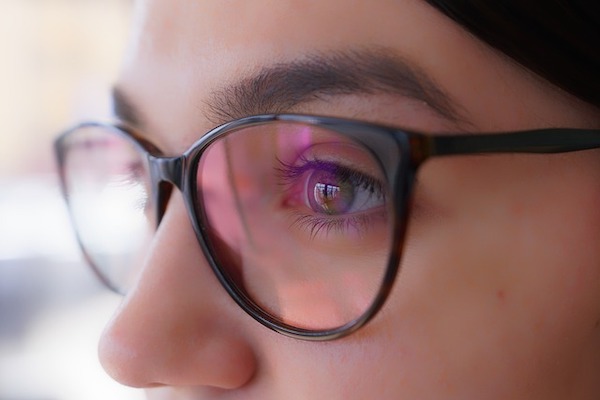 Of course it has. And even since 2011. But this is a relatively untapped segment. Covid-19, once again, is a game-changer. Appointments for optical services are one of the consequences. The impact of digitalization and the rise of remote work have helped support these solutions, preventing businesses from simply waiting idly by. For retailers, online appointment booking provides better visibility into their business. Furthermore, while online optical testing may not be as relevant as that performed by a specialist, it has the advantage of maintaining contact with customers.
A recovery in the form of a rebound
The crisis has had other collateral effects on the sector. Shop closures and numerous restrictions on travel and family gatherings have forced consumers to make choices. Since travel was becoming complicated, why not prioritize other spending categories? Eyeglasses are one of them. And then, faced with the uncertainty of how the situation will evolve, and the risk of further government closures or shortages of raw materials, people are making sure the whole family is better equipped. Spending significantly more time at home, particularly in front of screens, has played a major role in customers' approach to risks. Blue light filtering treatments have become even more important. All these factors have led to a considerable rebound in the optical sector . Logically, it is lenses that have driven this rebound, while contact lenses and sunglasses have lagged behind. The fact that people are going out less has also played a role.
The eco-responsible approach has a role to play
We witnessed, especially in the early stages of the crisis, a significant questioning of our lifestyles. Public opinion, increasingly sensitive to environmental issues, could only acknowledge the beneficial effects of a near-complete halt in the production of industrial goods, as well as the significant decrease in the use of public transportation. Optical manufacturers, who already possessed this mindset, saw it as an opportunity to reinforce their values. Market-based ecology was taking a new turn. While it still has many hurdles to overcome, eco-responsible optics is no longer a niche segment, but rather an essential component of the sector. Faced with this approach, there is a need to combat those who are simply imposing their practices. Highlighting the ability to use renewable materials is pointless if these materials have to be imported from the other side of the world. Using a local or responsible label is not necessarily a guarantee of quality, as the rules are sometimes incongruous.  Indeed, it is possible to obtain certain labels even if only one component of a frame meets the required criteria. The health crisis has helped create a new horizon for those who integrate responsible ecological and social values. For now, while awareness is certainly present, government initiatives are lacking to encourage manufacturers and retailers to fully integrate these elements into their sales and production chains. The optical industry can be one of the driving forces behind this, given its growing awareness of the issue. The health crisis, as a whole, has redefined the foundations of commerce. The consequences of Covid-19 on the optical industry have been numerous. While we must expect to have to live with the virus, let's hope that this experience doesn't have lasting repercussions in the face of regulations that can impact an industry, both positively and negatively. But nothing is less certain.