

FILE Optical Illusions, a Scientific Tool
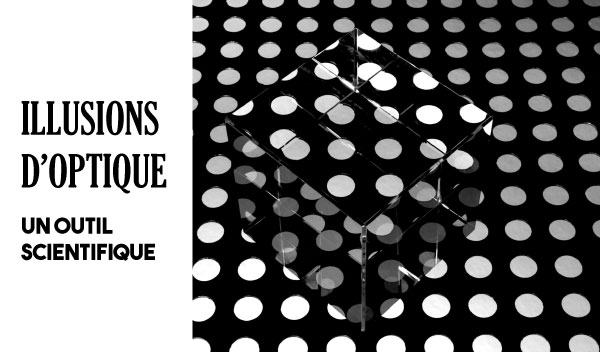
Often confined to visual games or simple curiosities shared on social networks, optical illusions fascinate. But their interest can sometimes go beyond entertainment: optical illusions constitute a valuable scientific research tool in neuroscience and ophthalmology. Thanks to these trompe-l'oeils, scientists analyze the cerebral mechanisms of visual perception, test the limits of the cognitive system and identify certain vision disorders. Many research centers, such as the Max Planck Institute or the laboratories affiliated with the Vision Sciences Society , explore these phenomena to better understand the functioning but also the dysfunctions of our vision.
What optical illusions reveal about our visual brain
An optical illusion is an image that, although fixed or simple, deceives our visual perception by distorting reality. It thus highlights the cognitive shortcuts taken by the brain to process information.
It is precisely this apparent flaw that interests neuroscientists. By studying the brain's reactions to well-constructed illusions, they are able to map the neural circuits involved in recognizing shapes, colors, movements, and depths.
For example, motion aftereffect illusions (where a fixed object appears to move after a moving object has been fixed) help us understand the functioning of the MT/V5 visual areas, which are responsible for processing motion. Other illusions, such as the Müller-Lyer illusion (lines of the same length perceived as different), are used to study how the brain constructs the notion of space.
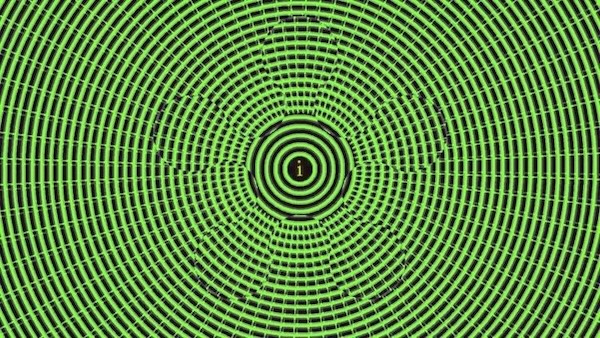
Research conducted by the University of Cambridge has shown that certain illusions, such as the Ponzo illusion (where two identical lines appear to be different sizes due to perspective), are perceived differently in individuals with ASD (autism spectrum disorder). This offers insights into differences in perceptual and spatial processing in these cognitive profiles.
A diagnostic tool for visual disorders

Optical illusions aren't just used to explore how a healthy brain functions; they're also used to detect certain vision disorders. By testing a patient's perception of an illusion, researchers can assess how their visual circuits are altered.
Some illusions are thus adapted to reveal anomalies linked to pathologies such as age-related macular degeneration (AMD), schizophrenia, or even post-traumatic neurovisual disorders. For example, an abnormal response to certain contrast or perspective illusions can signal damage to the cortical visual pathways.
The tool is all the more relevant because it doesn't necessarily require invasive technology. By using visual tests on a tablet or screen, researchers and clinicians can perform preliminary diagnoses, particularly in areas with limited medical facilities.
Optical illusions have also found their place in research on autism or atypical perception. Studies have shown that some people with autism spectrum disorders perceive illusions differently, which may indicate a specific brain organization of visual processing.
Used in ophthalmology, the Ambler grid illusion consists of a regular grid that patients are asked to observe. A perceived distortion of the lines can indicate macula damage, an early sign of AMD (Age-Related Macular Degeneration). This simple test, based on a visual illusion, allows for a quick and inexpensive diagnosis.
Optical Illusions: A Scientific Tool for the Future of Visual and Cognitive Health
Beyond their experimental function, optical illusions play an increasingly strategic role in the development of diagnostic tools.
Thanks to them, researchers can isolate specific mechanisms of visual processing, such as neural adaptation, cortical plasticity, and contrast sensitivity. These advances are not limited to simple modeling: they find concrete applications in ophthalmology, neuropsychology, and also in the development of visual assistance technologies.
Some illusions are used to detect pathologies early by assessing the distortions perceived by patients. Others allow us to better understand autism spectrum disorders or brain injuries by revealing specific perceptual biases.
Furthermore, artificial intelligence and virtual reality are increasingly drawing on lessons learned from these illusions to simulate realistic environments adapted to visual impairments.
Virtual reality devices incorporate illusions such as the "expanding room" to test sensitivity to visual movement. This can be used to assess vestibular disorders or spatial disorientation syndromes, which are particularly useful in post-stroke monitoring or for patients with brain injuries.
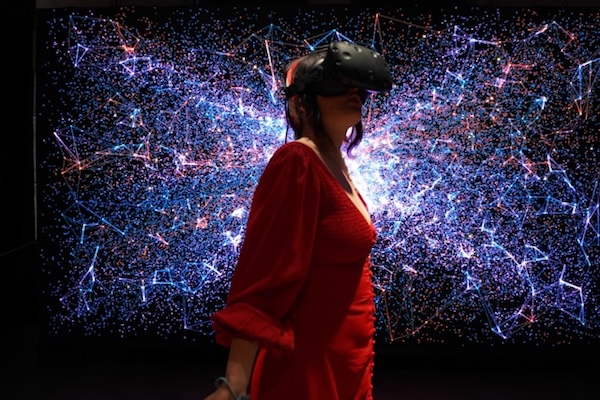
The perceptual games of optical illusions are thus becoming integral tools of medical research. The future of visual health could well lie, in part, in these images that deceive the eye to better reveal the brain.
What our brain sees is not always what our eyes perceive, and optical illusions are a mischievous reminder of this. Used intelligently, they allow us to probe the depths of our visual cognition, but also to better diagnose certain disorders. Between science, medicine, and education, these strange images reveal that optics is not limited to lenses and retinas, but touches the deepest mechanisms of our consciousness. Optical illusions therefore represent an undeniable scientific tool to aid us in this quest.