

FILE Optics and photonics: the optics of the future
The world of optics is entering a new era. Recent advances in photonic technologies and metamaterials are opening up unprecedented opportunities: ultrathin lenses, dynamic focusing devices, aberration reduction, and even the disappearance of traditional lenses in favor of nanostructured surfaces. But beyond the laboratory, these innovations are already shaping the future of corrective lenses and optical instruments. For professionals in the industry, photonic optics is a turning point to anticipate.
Optics and photonics: a silent revolution in the world of optics
Optics is undergoing a transformation. Long focused on vision correction, the industry is now exploring technologies from the worlds of quantum physics and nanoscience. Photonics, which involves manipulating light rather than electricity, opens up new perspectives for the design of thinner, more efficient, and smarter lenses.
These advances are no longer confined to laboratories. Large companies, as well as startups, are working to miniaturize and industrialize these innovations. The goal? Lenses capable of adapting to brightness, improving sharpness without aberration, and even projecting information in augmented reality. For opticians, this heralds a new era where technology is becoming a differentiating factor, just like design or visual comfort.

Photonics & metamaterial innovations: what this means for opticians
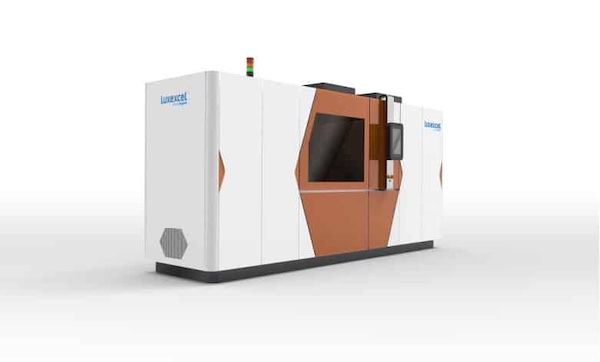
Advances in optical materials and photonics aren't confined to labs; they're already beginning to change the daily lives of optical stores. At the forefront, Luxexcel has distinguished itself with its VisionPlatform 7, capable of 3D printing corrective lenses incorporating components such as waveguides, liquid crystal sheets, and anti-reflective/hydrophobic coatings.
Meta acquired Luxexcel to go further in this direction, which illustrates the confidence that large groups place in these technologies as levers for future connected glasses .
For an optician, this means several concrete things. First, the ability to offer much thinner and lighter lenses can be a powerful selling point, particularly for customers who are sensitive to comfort or for those with strong prescriptions. Second, customization continues: whereas until now, the frame was modified, we will now be able to modify (or integrate from the start) advanced optical functions directly into the lens.
For example, Swiss lens manufacturer Optiswiss has partnered with Luxexcel to use VisionPlatform 7 in its manufacturing facilities, which could enable the mass production of “smart” lenses for connected glasses.
Another point to note concerns customer communication. Opticians must be prepared to explain what 3D-printed lenses are, what waveguides or holographic sheets are, and, above all, how these innovations provide concrete benefits: reduced thickness, intelligent integration, greater optical precision.
Finally, prices may be higher given the complexity of manufacturing. But these innovations will also allow us to position ourselves in high-value niche markets, such as smart glasses, augmented reality glasses, or high-performance visual lenses.
Towards smarter lenses and glasses: practical applications of photonic optics
Advances in photonics and metamaterials are paving the way for a new generation of optical products: thinner, more precise, but also more “intelligent.” These technologies no longer simply correct vision, but are beginning to interact with the environment, light, and even the wearer’s physiology.
Researchers at Stanford University and the startup Mojo Vision are working on smart contact lenses that integrate microscreens and sensors to display information directly in the field of vision. These lenses rely on microphotonics : they manage light at the nanostructure level, allowing an image to be displayed or contrast to be increased depending on the ambient light.
“Variable focal length” lenses are also making a strong comeback thanks to metamaterials. These lenses change their curvature or optical index depending on the distance of the object being viewed, via shape-memory materials or liquid microcrystals. Companies like DeepOptics are already developing prototype models, particularly for reading and work glasses.
Metamaterials now make it possible to design dynamic filters capable of blocking certain wavelengths depending on light intensity, without altering color perception. This paves the way for “photonic” glasses for screens, industrial environments, or conductors.

What strategies for opticians in the face of the photonic revolution?
The arrival of new technologies in the optical industry is redrawing the contours of the profession. As in other industries, the lines between craftsmanship, technology, and digital service are blurring. For opticians, this means anticipating these transformations and positioning themselves now in these emerging markets.
- Training in advanced optical technologies
Photonic products and adaptive lenses require new technical skills: understanding variable index materials, integrated sensors, and even connected systems.
Opticians could take advantage of training offered by competitiveness clusters such as Photonics France , or follow continuing education modules in partnership with laboratories or manufacturers.
- Building strategic partnerships with innovative manufacturers
More and more startups and laboratories are offering prototypes or licenses for lenses and glasses based on metamaterials. Regional or independent brands can establish pilot partnerships to test these innovations in advance.
These collaborations help improve the visibility of the point of sale and differentiate itself technologically.
- Focus on pedagogy and differentiation
Technology alone is not enough: it must be made understandable and desirable. Opticians who can simply explain to their customers what photonic optics is, how photonic-adaptive lenses, dynamic filters, or smart lenses work, gain a competitive advantage.
- Explore new economic models
Photonic products will undoubtedly have a higher initial cost, but they open the door to new economic models: subscription or technology rental offers , including maintenance and software updates, connected optical insurance, with visual performance monitoring or exchange guarantee, combined health + innovation offers, combining vision monitoring, blue light protection and smart lenses.
- Anticipate uses and expectations
Finally, it's important to think long-term. Younger generations, accustomed to smart and personalized technologies, will be the first to adopt these solutions. Opticians who invest today in monitoring, training, and partnerships are positioning themselves in a market that could become one of the most dynamic of the decade.