

Anti-stress glasses: the evolution of technological promises
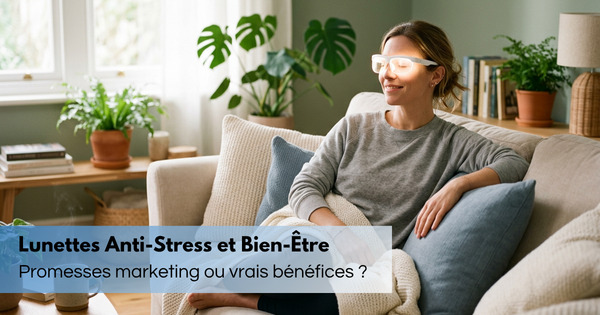 Two years after the craze for "anti- stress glasses," the landscape has become much clearer. Some of the brands that focused on general neurostimulation have disappeared or repositioned themselves, while light therapy , an older and better-documented technology, has established itself as the most credible component of this market. The term "anti-stress" itself has lost ground to more precise vocabulary: circadian regulation, jet lag management, and support for the winter blues.
Anti-stress glasses: a market that has refocused on light
The models that remain in 2026 almost all share the same technical basis: a diode emitting a narrow-spectrum blue or green light , positioned directly in front of the eye to act on the photosensitive ganglion cells of the retina, which are themselves linked to the biological clock. The Re-Timer relies on a 500 nm green LED rather than blue light, with an effectiveness considered equivalent to an exposure of 10,000 lux , while the AYO+ uses a narrow-band turquoise light intended to optimize the circadian rhythm with short sessions of around 20 minutes. The Luminette , on the other hand, has maintained a brighter and more diffuse approach. 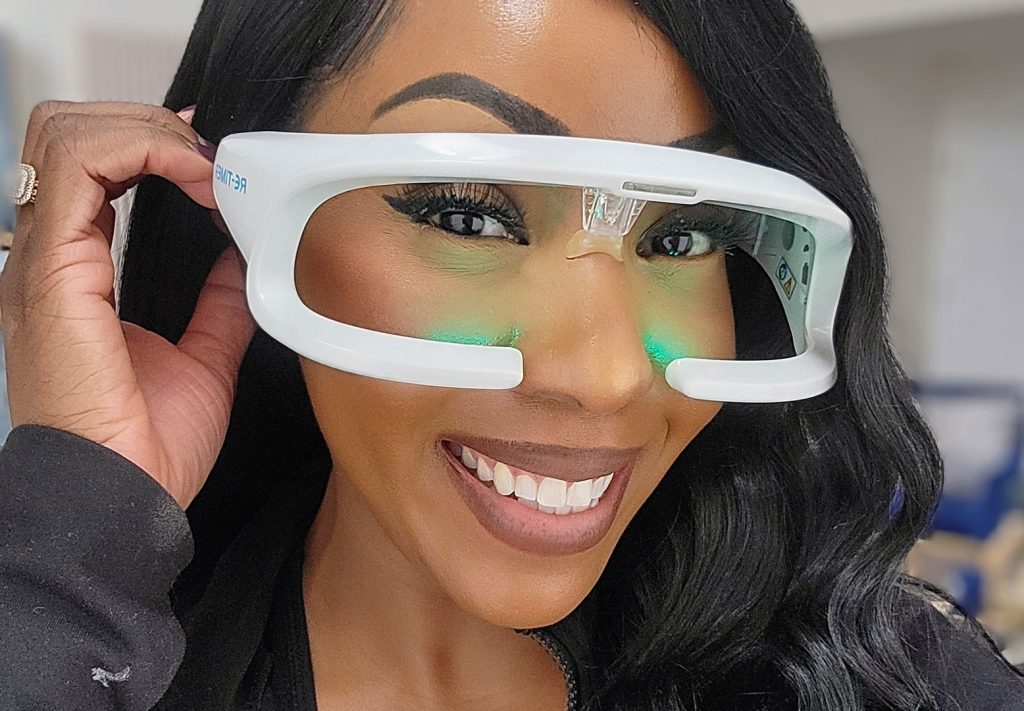 Model: Re-Timer[/caption]
Available data suggest a beneficial effect on anxiety , particularly when accompanied by sleep disturbances or a seasonal component, via mechanisms thought to involve serotonin and cortisol regulation — but this evidence remains less robust than that concerning seasonal depression.
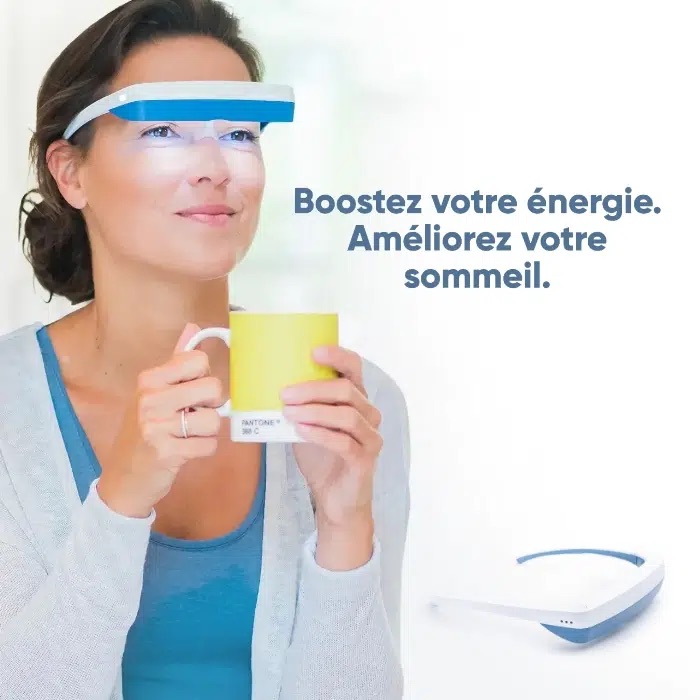
On this last point, however, the literature has expanded: a meta-analysis published in JAMA Psychiatry in 2025 reviewed the use of light therapy for non-seasonal depressive disorders, consolidating an already robust body of evidence for the seasonal indication.
Anti-stress glasses: what has disappeared, what has evolved
The PSiO , which combined pulsed photostimulation and audiostimulation, hasn't disappeared but has refocused: deployed for over twenty years in hospitals, it remains available, notably in Belgium where it is distributed in pharmacies by prescription. Its promise of "letting go" through multisensory stimulation remains, but its positioning is now more paramedical than aimed at the general public. 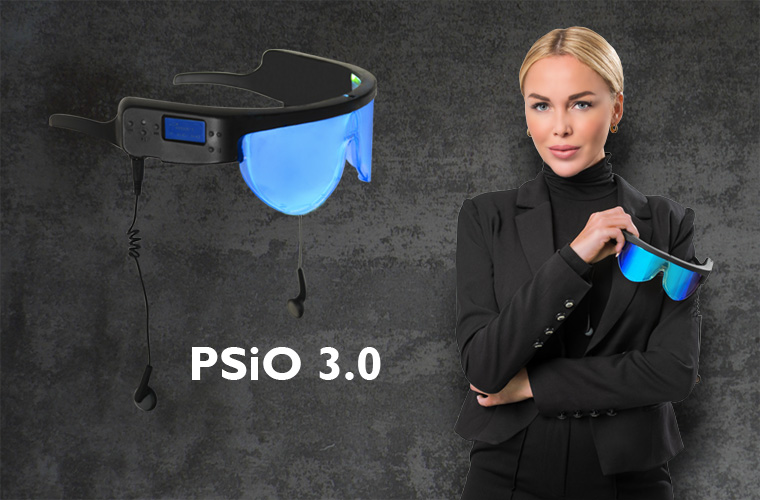 Model: PSIO 3.0[/caption]
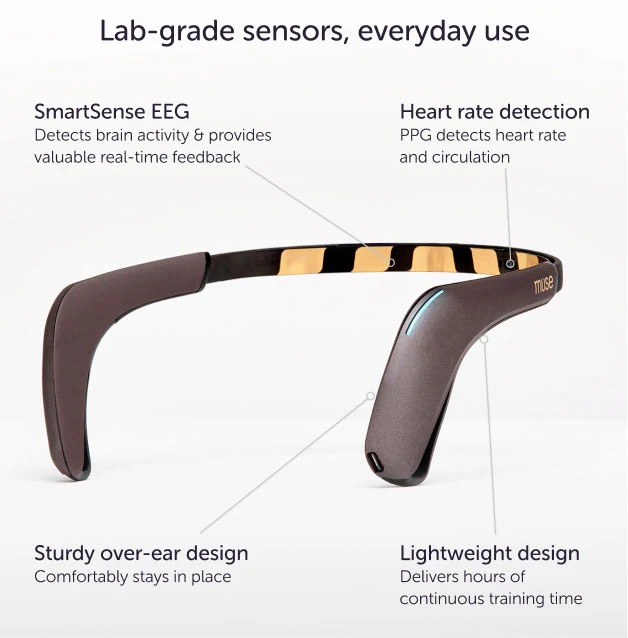
The Muse headband , for its part, has changed its nature rather than disappeared. Competitor Dreem ceased sales to individuals in 2021 to refocus on health and research, leaving Muse in a dominant position in the consumer EEG neurofeedback market. The device now measures brain activity, heart rate, and respiratory rate to refine guided meditation sessions and sleep tracking—a use that falls more under the umbrella of quantified biofeedback but aims to maintain its commitment to the initial "anti-stress" promise.
A marketing category that fades into the background when faced with evidence.
The observation in 2026 is quite clear: the devices that survived are those based on verifiable scientific evidence (circadian phototherapy) rather than a vague promise of well-being. Prices have also decreased for entry-level products: a pair of reliable light therapy glasses can now be purchased for between €50 and €299, with the most innovative certified models (neurofeedback, medical devices) reaching up to €599, making the technology more accessible than during its initial surge in popularity. However, a fundamental question remains: these devices treat a symptom (circadian rhythm disruption, fatigue, low mood) without necessarily addressing its underlying causes—screen overuse, work schedules, sedentary lifestyle. Their clinical value, now better established for certain specific indications, does not, therefore, negate the need for broader reflection on digital lifestyle habits.