

Smart Glasses: What's the Right Price?
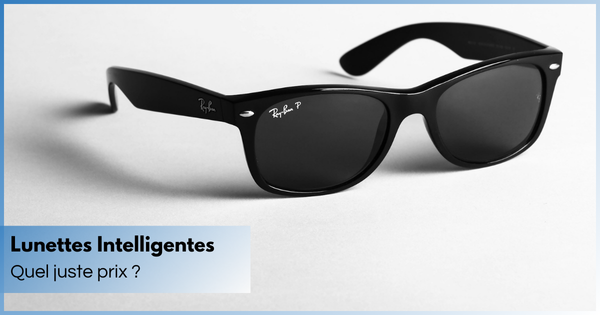
Smart glasses are gradually becoming a staple of the high-tech landscape. After a tentative start, the market has expanded significantly: Meta, Xiaomi, Lenovo, and Apple are all exploring the potential of this new connected device. But one question remains central to opticians, manufacturers, and consumers: what is the right price for these smart glasses?
Factors that determine the price of smart glasses
Part visual health tool, part lifestyle accessory, and part technology, smart glasses represent a significant investment. Setting a price isn't just a matter of adding up manufacturing costs. Several factors shape the value of this market:
- On-board technology : cameras, microphones, speakers, biometric sensors, augmented reality displays… The more features there are, the higher the price.
- Design and optical comfort : Unlike a smartwatch, glasses must remain lightweight, discreet, and suitable for vision correction. This requires quality materials and research into ergonomics.
- Brand positioning : Apple, Ray-Ban, or Meta don't set the same prices as an emerging Asian player. Perceived value plays a key role.
- Software ecosystem : Smart glasses are only as good as the apps they come with. A device that supports productivity or health services can justify a higher price.
Thus, we distinguish two main ranges:
- Entry level (€150–300): audio or connected glasses without screen (like Ray-Ban Meta Smart Glasses ).
- Mid-range (€400–800): models incorporating simple augmented reality and smartphone connectivity.
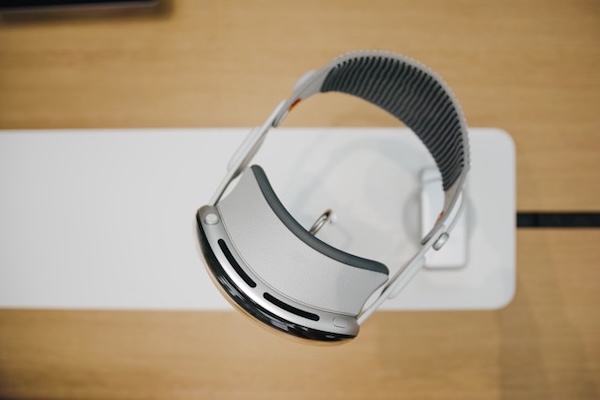
- High-end (€1,000–2,500): immersive glasses like HoloLens or Apple Vision Pro (although the latter is more of a headset than glasses).
Comparison with other connected objects
To understand the acceptable price, it is necessary to compare with other high-tech products adopted by the general public:
- Smartwatches : Priced between €150 (Xiaomi, Huawei) and €600 (Apple Watch). Their widespread adoption has shown that affordable pricing remains essential for democratization.
- VR/AR headsets : between €400 (Meta Quest) and €3,500 (Apple Vision Pro). The market remains niche, due to the lack of a price point suitable for the general public. The device itself has obvious ergonomic constraints, compared to glasses, phones, and watches.
- Smartphones : an essential item, with prices ranging from €200 to over €1,200. Their widespread popularity is explained by a balance between utility, design, and accessibility.
Applied to smart glasses, this parallel suggests that the psychological price point for mainstream adoption is around €400–700, a middle ground that combines affordability and technological value.
On the other hand, models costing more than €1,000 are more aimed at professionals (health, industry, engineering), where the tool becomes a productive investment.
Towards a fair price for smart glasses
How can we identify the "right price" for smart glasses? From an economic perspective, we can distinguish three approaches to consider:
- The increased cost price : add R&D, production, distribution, then add a margin (industrial logic).
- Market price : observe what the consumer is willing to pay. For an everyday item, the psychological price would rarely exceed €700.
- Perceived value price : This depends on the user benefit (time saved, visual comfort, new capabilities). A pair of glasses that actually increases cognition or improves health may then justify a higher price.
If we were to establish a rough economic projection, we would start with:
- “Audio & notifications” model → €200–300
- “Lightweight AR + connectivity” model → €500–700
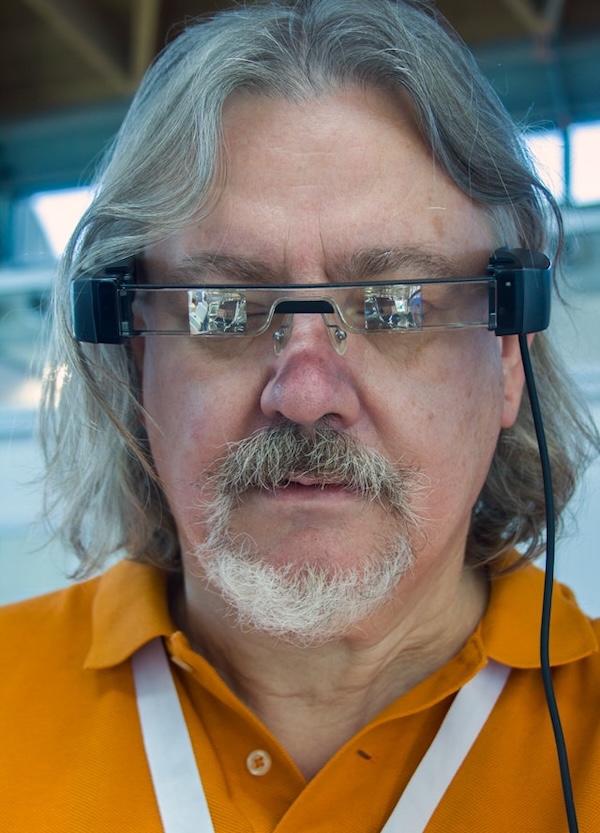
- “AR immersive pro” model → €1,500–2,500
So, for an optician wishing to offer a mass-market product, a fair price would be in the €400–700 range, a balance between innovation and accessibility.
Smart glasses have been promising to become the next revolution after smartphones for several years, but several conditions are necessary for this to happen. This starts with finding the right price. If they're too expensive, they'll remain the preserve of early adopters or professionals. If they're too cheap, they risk lacking reliability and perceived value.
The challenge for manufacturers, but also for the opticians who will distribute them tomorrow, is therefore to find the balance between innovation, visual comfort, and an acceptable psychological price. In this equation, the ideal target seems to be around €500, a threshold where consumers are ready to try out a new technology, without perceiving the purchase as an inaccessible luxury, like smartwatches.