

Children's eyewear: how to adapt your store?
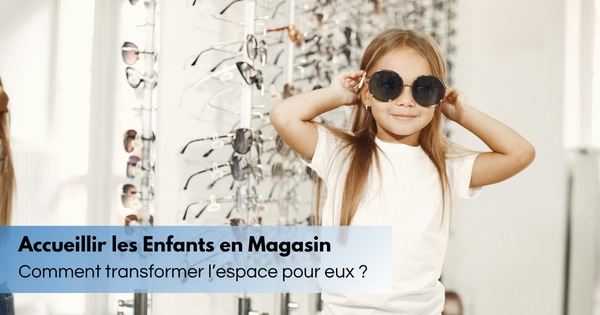 Children's eye health has never been so concerning—nor so important for opticians! In France, nearly one in two teenagers between the ages of 11 and 13 is already nearsighted, and the prevalence of myopia among 0-18 year olds has already reached 20.48%, according to the largest national study ever conducted on the subject . The Optikid 2025 Panorama from the Luz purchasing group also highlights that 46% of children tested during screening campaigns have insufficient visual acuity requiring referral to a specialist, a figure that can reach 75% in some age groups. As a result, adapting your optical shop to welcome children and their parents is now an essential tool for all professionals in the sector! We offer you an overview of best practices in this new article.
Children's optics: the play area, keeping them occupied to better advise them
The first reality of the children's department is time. Optical equipment easily requires 30 to 45 minutes, during which the little accompanying children become impatient — with the effects one can imagine on the parents' concentration and on the atmosphere of the store.
Creating a dedicated play area makes all the difference. Specialist suppliers like Kidea offer solutions designed for commercial environments: wall-mounted wooden games that require no drilling, activity towers that can entertain up to four children in less than one square meter, and multiplayer tables with interactive games. All these installations are designed for heavy use, easy to disinfect, and have non-removable parts.
Many opticians, such as L'Optic 2000 in Noisy-le-Roi, opt for wooden wall-mounted games to create a children's corner, complemented by a chair and a colorful rug, transforming the wait into a positive experience. Simple, but effective.

Eye exams: making medical procedures accessible to children
A child is not a miniature adult, and examining their eyesight requires a different approach. The most advanced opticians and orthoptists now use specific tools:
The autorefractometer is particularly suitable for young children because it measures refractive error without requiring a subjective response from the child. With this tool, a screening can take less than a minute. Recent models, such as the QuickSee (portable, without a chin strap), allow for measurements while standing, ideal for toddlers.
To hold the attention of infants and young children during the examination, professionals recommend having several light and sound toys available, or even playing the child's favorite show on a tablet during the measurement. Finger dexterity charts now incorporate animations and characters to capture the attention of toddlers who don't yet know their letters.
In Chicago, the Optical Shops at Ann & Robert H. Lurie Children's Hospital represent a model of a fully-fledged children's optical center. Specializing exclusively in children's vision from birth, this space offers:
- frames for infants,
- Customizable frames for children with Down syndrome or Apert syndrome,
- specialized contact lenses for amblyopia,
- and visual aids for visually impaired children.
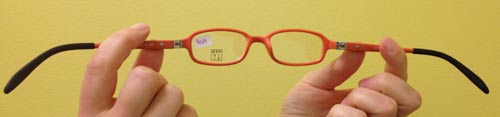
Design and merchandising: speaking the language of children
The child should feel welcome from the moment they walk through the door. Here are some key principles drawn from global best practices, particularly from stores specializing in welcoming toddlers:
Color-coded zoning naturally guides the customer journey. Display areas use bright, cheerful colors to attract children's attention, while the fitting area adopts softer shades to help them concentrate. Displays shaped like clouds, animals, or stars replace standardized shelving. The furniture, made of natural wood or colored plastic, has rounded edges and is constructed from non-toxic materials.
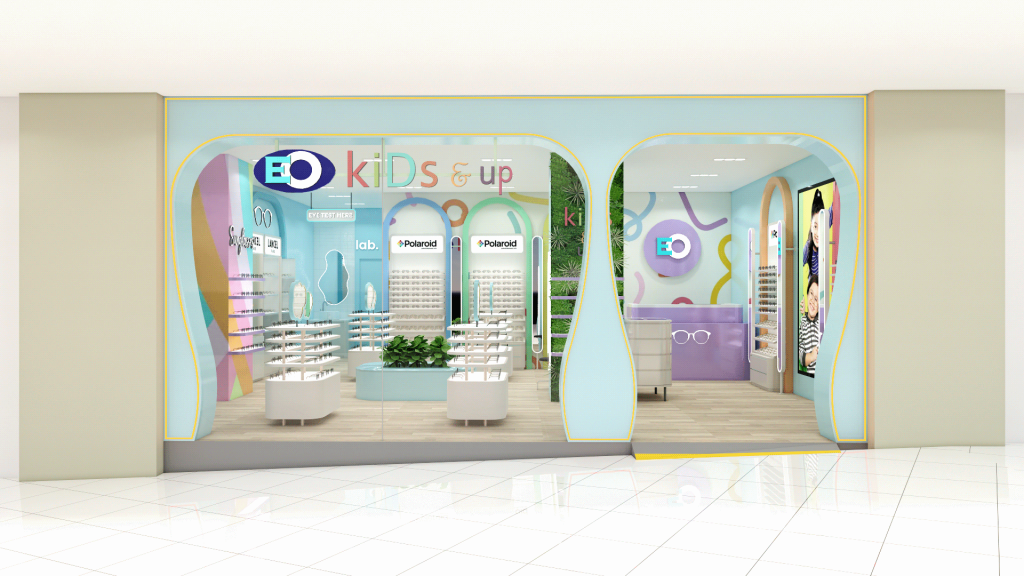
Positioning at child height is a huge plus! Children's frames can thus be accessible at their level, in displays within easy reach, so that trying them on becomes spontaneous and fun.
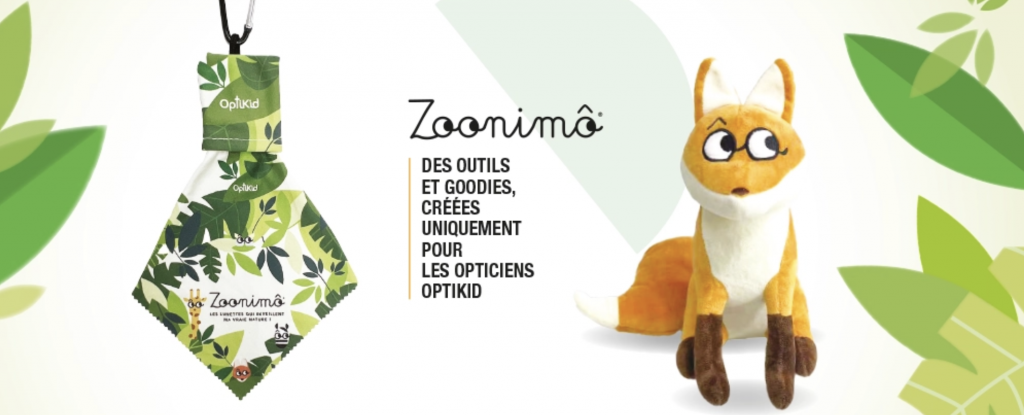
In France, the Optikid network (an exclusive label of the Luz buying group, which now includes over 200 certified opticians) has systematized this concept with a dedicated corner featuring specific furniture, consistent signage, and in-store communication tools (particularly promotional items) harmonized nationwide. The CDO (Centrale des Opticiens, the French Opticians' Association) has launched a turnkey "Kid Expert" label for its members wishing to specialize in this segment.
Children's optics: training, an invisible but essential pillar
Even the most beautiful children's accommodations cannot replace human expertise. Opticians who wish to become certified specialists in children's vision or who want to develop their skills in this area must update their knowledge and practices, primarily regarding children's vision correction, and supplement this foundation with a series of training courses led by pediatric ophthalmologists and orthoptists. The goal: to know how to adapt their communication, reassure an anxious child, and detect specific signs such as strabismus, severe progressive myopia, or needs related to autism from birth.
This expert positioning also allows opticians to develop a network of prescribers (ophthalmologists, pediatricians, school nurses) who naturally redirect families to their store.
Key takeaways
A child in an optical shop is simultaneously a patient in their own right, a potential customer, and the child of a parent who can be loyal for years to come. Creating a suitable space—with a play area, an examination designed for them, child-friendly merchandising, and trained opticians—is no longer a differentiating factor: it has become an expected standard. Epidemiological figures on childhood myopia even make it a public health issue. Opticians who invest seriously in this area are well aware of this, and their sales could well increase as a result…
Featured photo credit: Gustavo Fring